JP's Blog
Programming, Topic: Generative Art
Recent posts (Page 8 of 9)
AoC 2021 Day 20: Enhancinator
Source: Trench Map
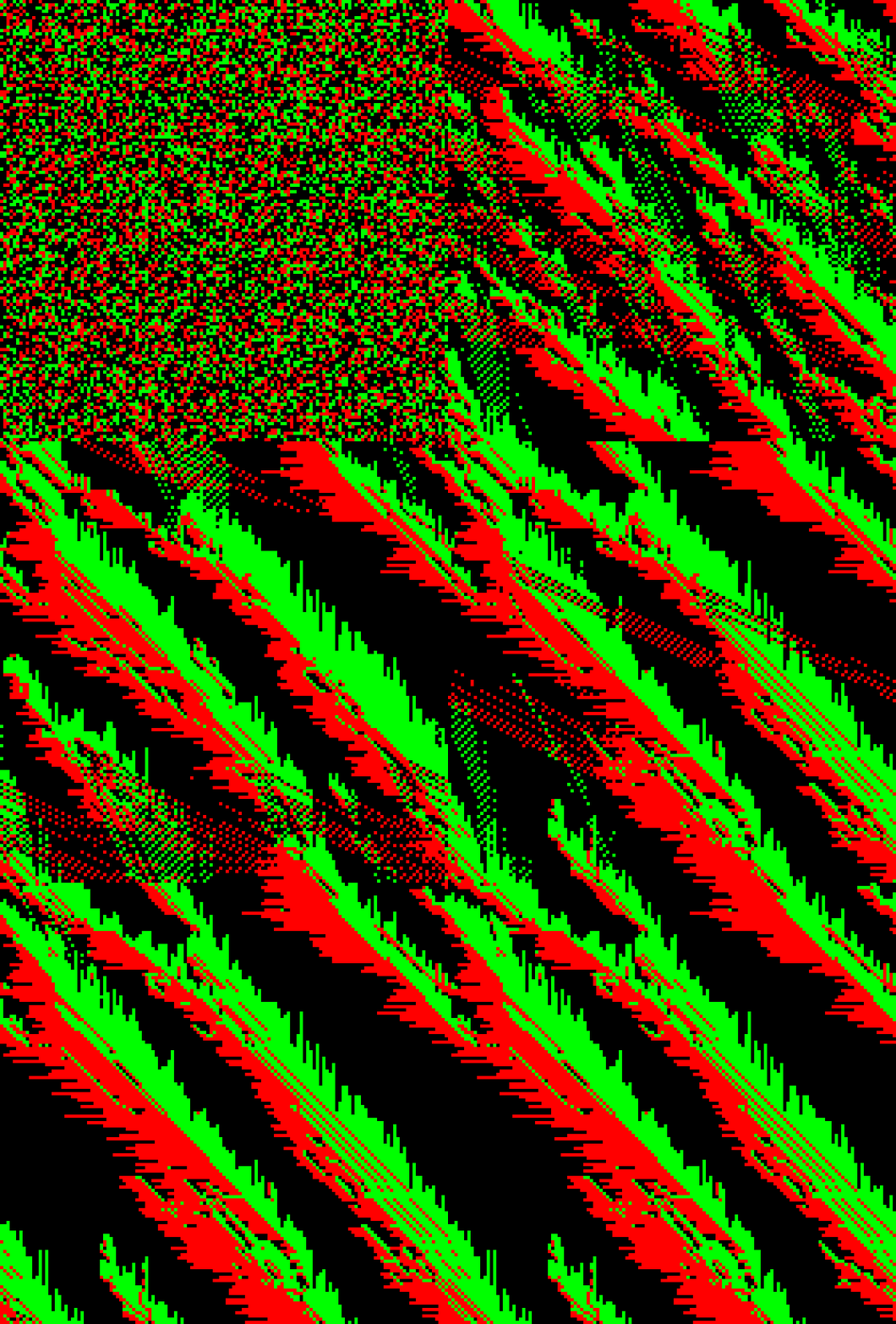
Part 1: Given a 9->1 cellular automota update function (take the pixel and 8 surrounding pixels as a 9-bit index into the function) and a binary image, apply the function twice and count the number of ’lit’ pixels. Assume that the canvas is infinite.

AoC 2021 Day 11: Octopus Flashinator
Source: Dumbo Octopus
Part 1: Simulate a grid of numbers such that on each tick: advance all numbers by 1, any number that increases over 9 will ‘flash’ and add 1 to all neighbors (recursively, but each cell can only flash once) and then reset to 0. Count the number of flashes in the first 100 ticks.
AoC 2021 Day 6: We All Glow Down Here
Source: Latternfish
Part 1: Simulate a population of lanternfish. Each fish is immortal, starts having children after 9 days, and has another child after 7 more days. Calculate the number of fish after 80 days.
Neural Network Cellular Automata
Okay. A random post on the /r/cellular_automata subreddit inspired me.
Let’s generate a cellular automata where each pixel updates based on a neural network given as input:
- The x/y coordinates (scaled to the range 0-1)
- An optional random value (to make it more dynamic)
- A variety of neighboring data, such as:
- The number of neighbors that are ‘active’ (> 50% white), ranges 0-8 scaled to 0-1. This should allow Conway’s Game of Life
- The RGB values of all neighbors (allows a superset of the above)
- Gradients, subtract color value of the left from the right so that you get edges and side to side movement
Let’s do it!
A quick ruby DSL for creating L-Systems
L-Systems are pretty awesome. With only a bare few rules, you can turn something like this:
LSystem.new("Barnsley Fern") do
    start "+++X"

    rule "X", "F+[[X]-X]-F[-FX]+X"
    rule "F", "FF"

    terminal "F" do forward end
    terminal "[" do push end
    terminal "]" do pop end
    terminal "-" do rotate -25 end
    terminal "+" do rotate +25 end
end
Into this:
A DSL for rendering magic circles and runes
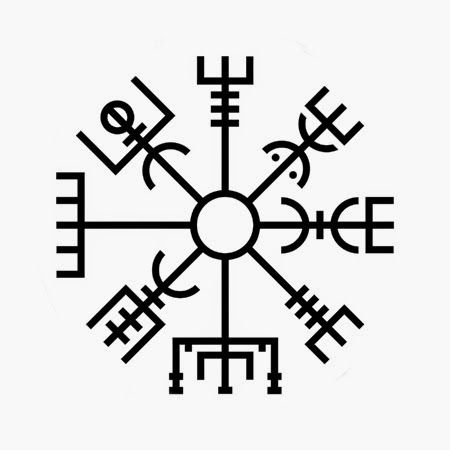
Let’s make magic circles/runes!
Turn this:
rune do
    scale 0.9 do
        circle
        polygon 7
        star 14, 3
        star 7, 2
        children 7, scale: 1/8r, offset: 1 do |i|
            circle
            invert do
                text (0x2641 + i).chr Encoding::UTF_8
            end
        end
    end
    scale 0.15 do
        translate x: -2 do circle; moon 0.45 end
        circle
        translate x: 2 do circle; moon 0.55 end
    end
end
Into this:
Genuary: Triple Nested Loops
The fine people of /r/generative / Genuary2021 have a series of challenges for generative works for the month of January. I don’t think I’m going to do all of them, but pick and choose. For example, the very first prompt is:
// TRIPLE NESTED LOOP
My goal was to draw a grid of circles across the X/Y the image and nest them for the third dimension. To make it a little more interesting, I added a few different color modes. seededRandom is my personal favorite, that was interesting to get working.
Pictogenesis: Stack Transpiling
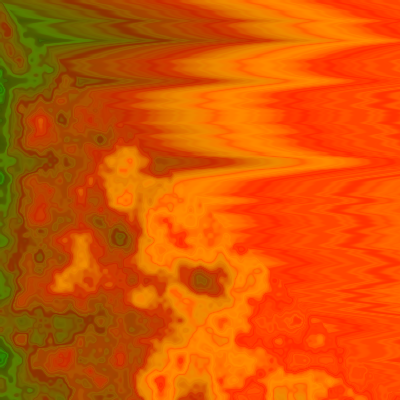
Much like transpiling register machines, now we have a chance to transpile stack machines. Unfortunately, it doesn’t actually speed up the code nearly so much (the stack is just not as effective of a memory structure in this case), but it’s still an interesting bit of code.
In this case, we turn something like this:
invsub
polT
writeG
id
neg
zero?
sin
invsub
ZERO
inv
Into this:
function(X, Y) {
  this.x = X;
  this.y = Y;

  this.stack = [];
  this.r = undefined;
  this.g = undefined;
  this.b = undefined;

  this.stack.push(X);
  this.stack.push(Y);

  var arg0 = 0;
  var arg1 = 0;
  var arg2 = 0;
  var result = 0;

  // invsub
  arg0 = this.stack.pop() || 0;
  result = 1 - arg0;
  result = result % 1.0;
  this.stack.push(result);

  // polT
  arg0 = this.stack.pop() || 0;
  arg1 = this.stack.pop() || 0;
  result = Math.atan2(arg0, arg1);
  result = result % 1.0;
  this.stack.push(result);

  // writeG
  arg0 = this.stack.pop() || 0;
  this.g = arg0;

  // id
  arg0 = this.stack.pop() || 0;
  result = arg0;
  result = result % 1.0;
  this.stack.push(result);

  // neg
  arg0 = this.stack.pop() || 0;
  result = -arg0;
  result = result % 1.0;
  this.stack.push(result);

  // zero?
  arg0 = this.stack.pop() || 0;
  arg1 = this.stack.pop() || 0;
  arg2 = this.stack.pop() || 0;
  result = arg0 === 0 ? arg1 : arg2;
  result = result % 1.0;
  this.stack.push(result);

  // sin
  arg0 = this.stack.pop() || 0;
  result = Math.sin(arg0);
  result = result % 1.0;
  this.stack.push(result);

  // invsub
  arg0 = this.stack.pop() || 0;
  result = 1 - arg0;
  result = result % 1.0;
  this.stack.push(result);

  // ZERO
  result = 0;
  result = result % 1.0;
  this.stack.push(result);

  // inv
  arg0 = this.stack.pop() || 0;
  result = 1 / arg0;
  result = result % 1.0;
  this.stack.push(result);


  return [
    this.r === undefined ? this.stack.pop() || 0 : this.r,
    this.g === undefined ? this.stack.pop() || 0 : this.g,
    this.b === undefined ? this.stack.pop() || 0 : this.b,
  ];
}
Pictogenesis: Stack Machine
Okay, enough with register machines. Let’s make something new. This time, a stack based machine!
Rather than keeping it’s memory in a series of memory cells, there will be a single stack of values. All functions can pop values from the top of the stack or push them back on. I will add the ability to read the X/Y value and directly write R/G/B, but you can’t write to the former or read from the latter, so you can’t use them as registers. Let’s see what that looks like!
All posts
- 2026-01-31: Genuary 2026: And so it ends
- 2026-01-31: Genuary 2026.31: Shader
- 2026-01-30: Genuary 2026.30: Bug
- 2026-01-29: Genuary 2026.29: Evolution
- 2026-01-28: Genuary 2026.28: No Libraries, No Canvas
- 2026-01-27: Genuary 2026.27: Lifeform
- 2026-01-26: Genuary 2026.26: Recursive Grids
- 2026-01-25: Genuary 2026.25: Organic Geometry
- 2026-01-24: Genuary 2026.24: Perfectionist's Nightmare
- 2026-01-23: Genuary 2026.23: Transparency
- 2026-01-22: Genuary 2026.22: Pen plotter ready
- 2026-01-21: Genuary 2026.21: Bauhaus poster
- 2026-01-20: Genuary 2026.20: One line
- 2026-01-19: Genuary 2026.19: 16x16
- 2026-01-18: Genuary 2026.18: Unexpected paths
- 2026-01-17: Genuary 2026.17: Wallpaper Groups
- 2026-01-16: Genuary 2026.16: Order vs Disorder
- 2026-01-15: Genuary 2026.15: Invisible Object
- 2026-01-14: Genuary 2026.14: Fits Perfectly
- 2026-01-13: Genuary 2026.13: Self Portrait
- 2026-01-12: Genuary 2026.12: Boxes
- 2026-01-11: Genuary 2026.11: Quine
- 2026-01-10: Genuary 2026.10: Polar coordinates
- 2026-01-09: Genuary 2026.09: Cellular automata
- 2026-01-08: Genuary 2026.08: A city
- 2026-01-07: Genuary 2026.07: Boolean algebra
- 2026-01-06: Genuary 2026.06: Lights on/off
- 2026-01-05: Genuary 2026.05: Write 'genuary'
- 2026-01-04: Genuary 2026.04: lowres
- 2026-01-03: Genuary 2026.03: Fibonacci forever
- 2026-01-02: Genuary 2026.02: Twelve principles of animation
- 2026-01-01: Genuary 2026.01: One color, one shape
- 2023-03-03: Genuary 2023.31: Break a previous image
- 2023-03-02: Genuary 2023.30: Minimalism
- 2023-03-01: Genuary 2023.29: Maximalism
- 2023-02-28: Genuary 2023.28: Generative poetry
- 2023-02-27: Genuary 2023.27: In the style of Hilma Af Klint
- 2023-02-26: Genuary 2023.26: My kid could have made that
- 2023-02-25: Genuary 2023.25: Yayoi Kusama
- 2023-02-24: Genuary 2023.24: Textile
- 2023-02-23: Genuary 2023.23: Moiré
- 2023-02-22: Genuary 2023.22: Shadows
- 2023-02-21: Genuary 2023.21: Persian Carpet
- 2023-02-20: Genuary 2023.20: Art Deco
- 2023-02-19: Genuary 2023.19: Black and white
- 2023-02-18: Genuary 2023.18: Definitely not a grid
- 2023-02-17: Genuary 2023.17: A grid inside a grid inside a grid
- 2023-02-16: Genuary 2023.16: Reflections of a Reflection
- 2023-02-15: Genuary 2023.15: Sine Waves
- 2023-02-14: Genuary 2023.14: Asemic Writing
- 2023-02-13: Genuary 2023.13: Something you've always wanted to learn
- 2023-02-12: Genuary 2023.12: Tessellation
- 2023-02-11: Genuary 2023.11: Suprematism
- 2023-02-10: Genuary 2023.10: Generative Music
- 2023-02-09: Genuary 2023.09: Plants
- 2023-02-08: Genuary 2023.08: Signed Distance Functions
- 2023-02-07: Genuary 2023.07: Sample a color palette
- 2023-02-06: Genuary 2023.06: Steal like an artist
- 2023-02-05: Genuary 2023.05: Debug view
- 2023-02-04: Genuary 2023.04: Intersections
- 2023-02-03: Genuary 2023.03: Glitch art
- 2023-02-02: Genuary 2023.02: Made in 10 minutes
- 2023-02-01: Genuary 2023.01: Perfect loop
- 2022-08-29: Runelang: A Summoning Circle Generator
- 2022-08-25: Runelang: A Bind Rune Generator
- 2022-07-16: Runelang: Evaluation
- 2022-03-18: Runelang: The Parser (Part 2: Expressions)
- 2022-03-15: Runelang: The Parser (Part 1)
- 2022-02-24: Runelang: The Lexer
- 2022-02-23: Runelang: Language Specification
- 2021-12-25: AoC 2021 Day 25: Cucumbinator
- 2021-12-20: AoC 2021 Day 20: Enhancinator
- 2021-12-11: AoC 2021 Day 11: Octopus Flashinator
- 2021-12-06: AoC 2021 Day 6: We All Glow Down Here
- 2021-09-06: Neural Network Cellular Automata
- 2021-03-24: A quick ruby DSL for creating L-Systems
- 2021-01-26: A DSL for rendering magic circles and runes
- 2021-01-08: Genuary: Triple Nested Loops
- 2020-12-11: Pictogenesis: Stack Transpiling
- 2020-12-09: Pictogenesis: Stack Machine
- 2020-12-03: Pictogenesis: Transpiling
- 2020-12-01: Pictogenesis: Wrapping Modes
- 2020-11-24: Pictogenesis: Register Machine
- 2020-11-23: Pictogenesis: The Idea
- 2020-11-20: Backtracking Worm Coral
- 2020-11-19: Worm Coral
- 2020-11-18: p5js Boids
- 2020-11-17: p5js Worms